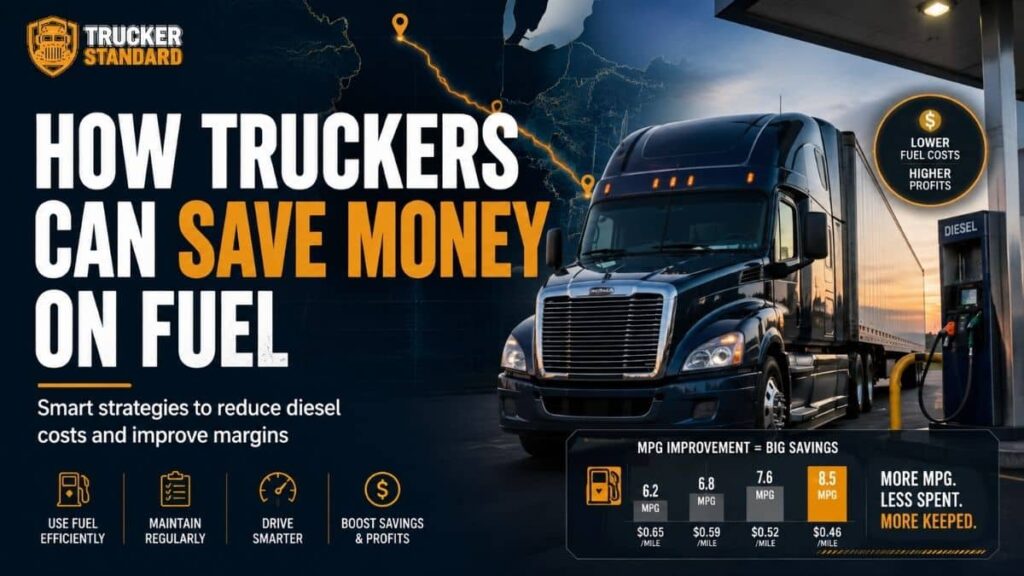
Best Fuel Cards for Truckers
Compare the best fuel cards for truckers by real discount structure, fees, truck-stop coverage, credit requirements, spending controls, and fleet size.
What Are the Best Fuel Cards for Truckers?
The best fuel cards for truckers in 2026 are Mudflap, AtoB, TCS, RTS, Fleet One EDGE, Fuelman, and RoadFlex. Mudflap stands out for cost-plus diesel discounts; AtoB for broad Visa-based acceptance and controls; TCS for owner-operators and cash-secured access; RTS for trucking-specific discounts and bundled services; Fleet One EDGE for an established truck-stop network; Fuelman for fleet controls and reporting; and RoadFlex for nationwide prepaid acceptance with transparent published pricing.
Methodology: Trucker Standard compared official provider pages for discounts, network size, pricing, credit structure, controls, and carrier fit. We did not independently test every card. Discounts vary by location, fuel price, volume, payment terms, eligibility, and program conditions.
Fuel Card Leaders at a Glance
Mudflap
Mudflap advertises cost-plus discounts of up to $1 per gallon at more than 3,500 participating truck stops, with wider Visa acceptance through its card.
AtoB
AtoB combines truck-stop discounts with Visa-based acceptance, real-time controls, prepaid and credit options, and published pricing.
TCS
TCS offers a cash-secured card with no credit check, average published savings of 51¢ per gallon in Q1 2026, and zero in-network transaction fees.
7 Best Fuel Cards for Truckers in 2026
The order balances potential savings, usable coverage, transparent costs, trucking features, and accessibility. The highest advertised discount is not automatically the lowest net fuel cost.
Mudflap Fuel Card
Mudflap is a strong fit for owner-operators and small fleets that prioritize diesel price over traditional credit terms. Its core savings come from cost-plus discounts at participating locations. The Mudflap Card can also be used outside the discount network where Visa is accepted, but the strongest savings are tied to participating stops.
AtoB Fuel Card
AtoB is designed for fleets that want wide acceptance, software controls, and a choice between a credit product and prepaid card. AtoB publishes average truck-diesel discounts of 42¢ per gallon in its discount network, while purchases can be made wherever Visa is accepted.
TCS Fuel Card
TCS is a cash-secured trucking fuel card aimed at owner-operators and fleets that want discounts without relying on traditional credit approval. TCS states that clients averaged 51¢ per gallon in network during Q1 2026 and that there are no transaction fees at in-network truck stops.
RTS Fuel Card
RTS is attractive for carriers that want fuel savings alongside factoring, a load board, broker credit data, and trucking software. RTS advertises average savings of 45¢ per gallon at more than 3,500 stations and publishes zero monthly card fees.
Fleet One EDGE
Fleet One EDGE, offered by WEX, is built for growing fleets and owner-operators that value an established trucking-payment network. WEX publishes average savings of 15¢ per gallon in the discount network and acceptance at more than 12,000 truck stops nationwide.
Fuelman Diesel Card
Fuelman is better suited to businesses that value controls, reporting, fraud monitoring, maintenance management, and broad discount-network access. Its diesel plans publish savings of 12¢ per gallon at more than 40,000 locations, but monthly plan costs are substantial for very small fleets.
RoadFlex Unlimited
RoadFlex Unlimited is a prepaid Visa card for fleets that prioritize nationwide acceptance, no traditional credit check, and straightforward published fees. Its public pricing lists a 3¢-per-gallon discount, a $25 setup fee, and $3 per active card monthly.
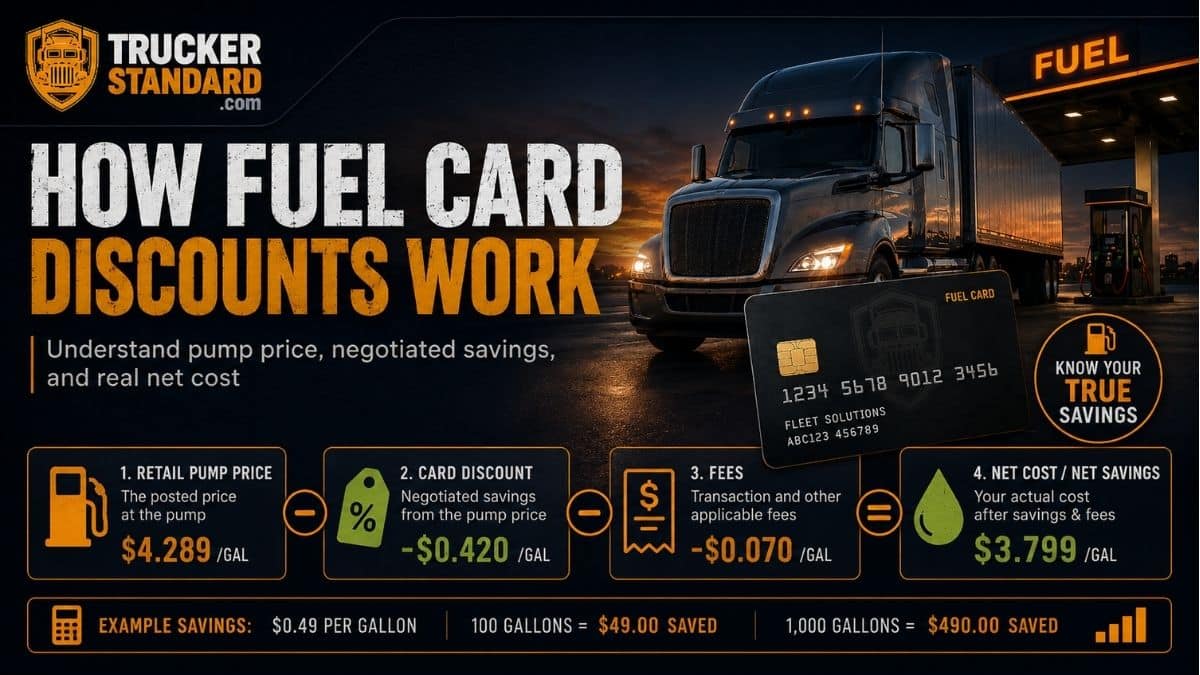
How Trucking Fuel Card Discounts Work
A fuel card can use a fixed rebate, retail-minus discount, cost-plus price, or negotiated network rate. The only reliable comparison is the final net cost at locations your trucks can use.
A fixed or variable amount is deducted from the posted pump price.
The price is based on a wholesale benchmark or network cost plus taxes and a markup.
A rebate may be credited later and may depend on volume, merchant, or payment status.
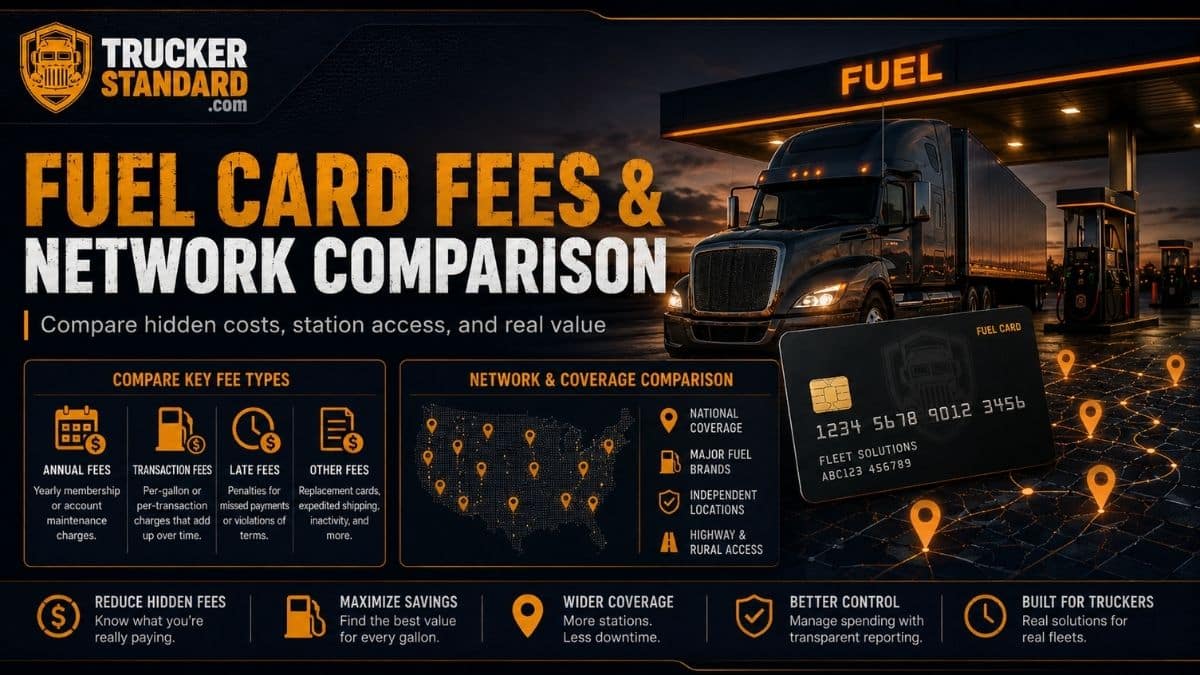
Fuel Card Fees and Network Coverage
A wider acceptance network reduces detours, but the best discounts may be concentrated in a smaller preferred network. Separate “where the card works” from “where the discount applies.”
Account setup, plan fees, and per-card fees can erase savings for low-volume fleets.
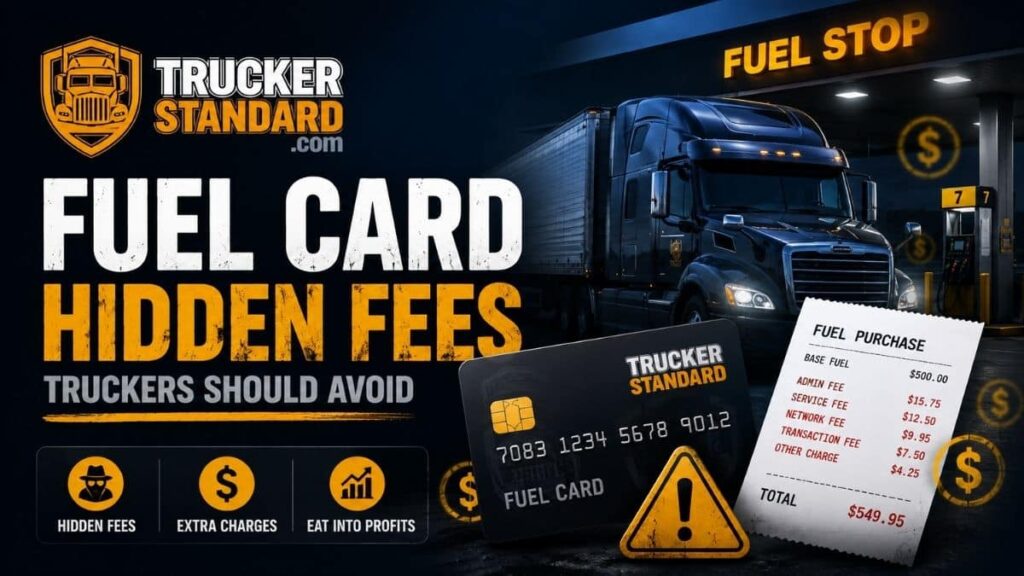
Check fuel, non-fuel, out-of-network, cash-advance, transfer, and declined-transaction charges.
This is where the advertised negotiated price or rebate usually applies.
A Visa- or Mastercard-based card may work widely without providing its best discount everywhere.
Extra miles, time, tolls, and idling can make a distant discount more expensive.
Multiply actual gallons by realized savings, then subtract every account and transaction fee.
How to Choose the Best Fuel Card for Your Trucking Business
Use your own fuel history instead of choosing from advertised maximums.
List location, gallons, price, route, truck, and current payment method.
Identify which candidate networks match your lanes without creating detours.
Compare today’s card price at stations you would realistically use.
Include setup, monthly, card, transaction, out-of-network, late, and transfer fees.
Compare prepaid, cash-secured, charge-card, credit-line, autopay, and deposit requirements.
Check driver limits, product controls, fraud alerts, receipts, integrations, and IFTA exports.
Common Fuel Card Comparison Mistakes
- Choosing by the maximum advertised discount instead of your route prices.
- Confusing card acceptance with discount availability.
- Ignoring monthly, transaction, out-of-network, and late fees.
- Driving extra miles for a discount that does not cover the detour.
- Assuming a no-credit-check card provides a revolving credit line.
- Failing to compare the card price with cash and loyalty-program prices.
- Ignoring payment frequency, deposit, reserve, or autopay requirements.
- Using one card for every route without checking local alternatives.
Need a Card Without Traditional Credit Approval?
Prepaid and cash-secured products may be easier for new authorities and carriers with limited business credit, but funding requirements and fees still matter.
Related Fuel Card Guides
Compare prepaid and cash-secured options for startups and owner-operators.
Review transaction, monthly, network, late, transfer, and replacement charges.
Compare discounts, control, credit, convenience, and the true net fuel price.
Best Fuel Cards for Truckers FAQ
What is the best fuel card for an owner-operator?
Mudflap and TCS are strong owner-operator options. Mudflap focuses on cost-plus diesel discounts, while TCS offers a cash-secured card with no credit check and in-network trucking discounts. The better option depends on your lanes, station preferences, fees, and funding needs.
Which truck fuel card has the biggest discount?
Among the providers reviewed, Mudflap advertises up to $1 per gallon and AtoB advertises discounts up to $2 per gallon at selected partner locations. Maximum discounts are not guaranteed and should be compared with the actual card price, fees, and route availability.
Which fuel card is accepted at the most stations?
Visa-based cards such as AtoB, Mudflap Card, and RoadFlex can be used broadly wherever their respective card networks are accepted. However, their deepest discounts may apply only at selected partner or in-network locations.
Can a new trucking company get a fuel card without a credit check?
Yes. Cash-secured or prepaid products such as TCS, Mudflap’s pay-as-you-go option, AtoB Unlimited, and RoadFlex Unlimited may be available without traditional credit approval. These products require the carrier to supply funds rather than rely on an unsecured credit line.
Are fuel card discounts better than cash prices?
Sometimes, but not always. Compare the card’s final transaction price with the station’s cash price, loyalty discount, and nearby alternatives. Add card fees and detour costs before deciding which payment method is cheaper.
Do fuel cards charge monthly or transaction fees?
Some do. Possible charges include setup, monthly account, per-card, fuel transaction, out-of-network, late-payment, replacement, transfer, cash-advance, and expedited-funding fees. Pricing varies by provider and product.
What is the difference between a discount network and an acceptance network?
The acceptance network is where the card can be used. The discount network is the smaller group of locations where negotiated prices or rebates apply. A card may work nationwide without delivering its best discount at every station.
How should a fleet calculate real fuel card savings?
Calculate the difference between the price you would otherwise pay and the final card price, multiply it by actual gallons, then subtract all account, card, transaction, financing, transfer, and detour costs.
Official Sources Reviewed
- Mudflap — Fuel card savings and network
- Mudflap — How the fleet card works
- AtoB — Discounts, pricing, prepaid and credit products
- AtoB — Acceptance and discount-network explanation
- TCS — Average discount and in-network locations
- TCS — Owner-operator card and no-credit-check information
- RTS — Fuel card savings and network
- RTS — Published fees, savings, and eligibility features
- WEX — Fleet One EDGE card network
- WEX — Trucking card savings and product fit
- Fuelman — Diesel discounts, monthly plans, and controls
- RoadFlex — Published pricing and discount structure
- RoadFlex — Prepaid card terms and nationwide acceptance