
eCapital Freight Factoring Review
eCapital is a strong fit for owner-operators and fleets that invoice creditworthy brokers or shippers and cannot afford to wait 30–90 days for payment. Its transportation specialization, same-day funding options, mobile tools, and broad financing platform are meaningful strengths. The main weakness is pricing transparency: your real cost depends on the quote and contract, so fees, recourse, minimums, reserves, and termination terms must be reviewed before signing.
Is eCapital Freight Factoring Worth It?
eCapital freight factoring is worth considering when your trucking company has completed loads, issued valid invoices to creditworthy business customers, and needs working capital before those invoices are paid. It may help cover fuel, payroll, maintenance, insurance, and growth expenses without waiting through long payment cycles.
It is not automatically the cheapest option. eCapital does not publish one universal freight factoring rate because pricing varies by customer quality, invoice volume, payment speed, risk, and contract structure. The correct decision depends on the complete cost per invoice and the obligations written into the agreement.
Bottom line: eCapital offers a credible transportation-focused solution with strong funding speed and account tools, but the offer should be judged from the written quote—not from the headline promise of fast cash.
Where eCapital Performs Well—and Where to Be Careful
What We Like
- Freight factoring is built specifically for transportation businesses.
- eCapital advertises access to cash in as fast as one hour for eligible transactions.
- Its platform and mobile tools support invoice uploads, funding requests, payment tracking, and reporting.
- Qualification focuses heavily on the credit strength of the broker or shipper paying the invoice.
- The company can also support larger fleets with A/R financing and asset-based lending as needs change.
What Requires Attention
- No universal public freight-factoring rate applies to every trucking company.
- Fast funding depends on verification, approval, submission timing, and transfer method.
- Recourse, non-recourse, reserve, minimum-volume, setup, wire, ACH, and termination terms can materially change the cost.
- Factoring is designed for business invoices—not personal loans or consumer expenses.
- A low headline rate can be misleading if the agreement contains multiple additional fees.
Approval, pricing, and funding speed depend on your business, invoices, and customers.
eCapital Freight Factoring Key Facts
These facts summarize the current official transportation and freight-factoring information available from eCapital. Individual offers and eligibility can differ.
How eCapital Freight Factoring Works
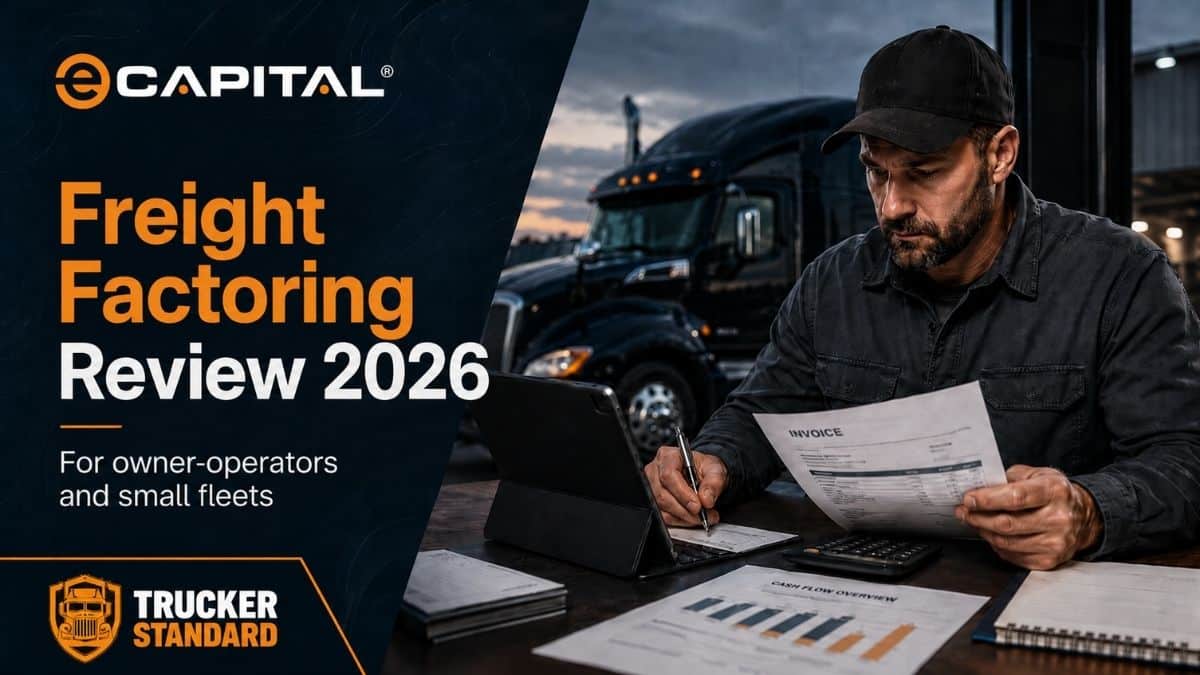
The exact workflow depends on your agreement, but the basic structure is straightforward.
Your trucking business delivers the freight and creates an invoice for the broker or shipper.
You send eligible invoice documentation through the eCapital platform or mobile workflow.
eCapital verifies the invoice and customer. Approved requests may receive funds quickly, including same-day options.
The broker or shipper pays according to the invoice terms. Reserve and final settlement depend on your agreement.
Why eCapital Scores 8.4 out of 10
Methodology: this is TruckerStandard’s editorial assessment based on product fit, official documentation, funding claims, tools, financing breadth, and transparency. It is not a customer-review average or a guarantee of individual results.
How Much Does eCapital Freight Factoring Cost?
Request the complete cost—not only the factoring rate
eCapital’s public educational material explains that factoring costs vary according to customer credit quality, invoice volume, payment terms, risk, and operational workload. Its financial glossary describes broad industry factoring-fee ranges, but those figures are not a personalized eCapital quote and should not be treated as the rate your business will receive.
Your actual cost should be evaluated as the total dollars paid to factor a typical invoice under realistic customer-payment timing.
Model the total cost on invoices paid in 30, 45, 60, and 90 days.
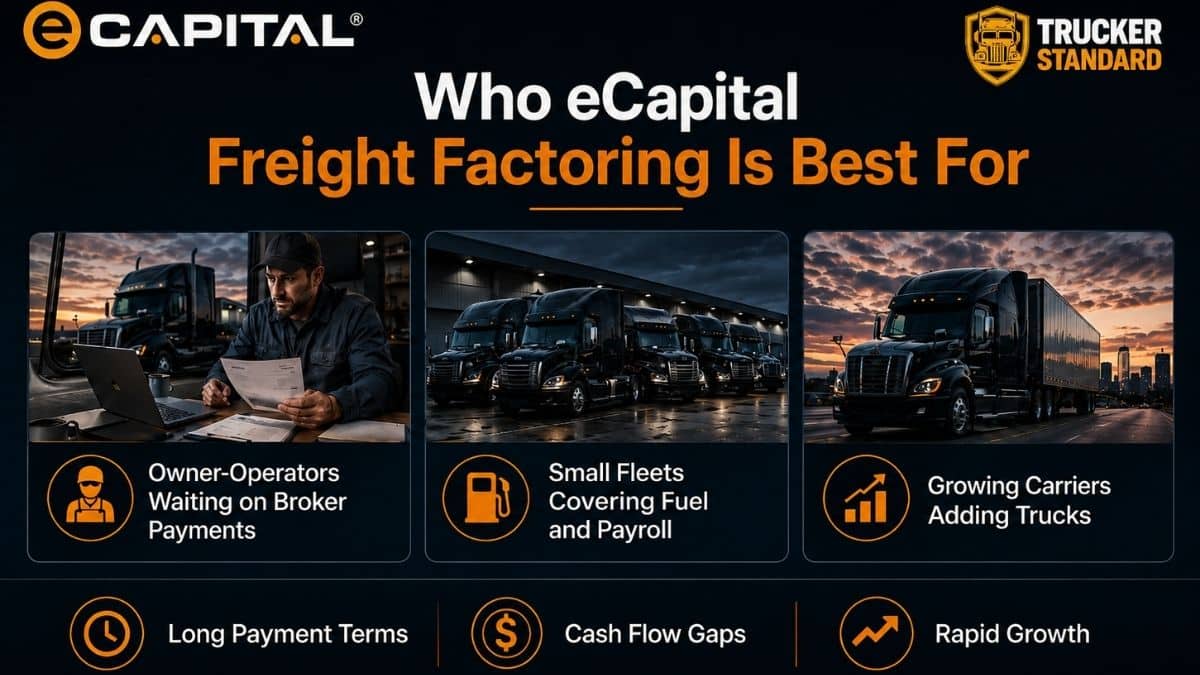
Who eCapital Freight Factoring Is Best For
A completed load has created revenue, but fuel and operating expenses are due before the broker pays.
Weekly payroll, fuel, maintenance, insurance, and repairs create a mismatch with slow customer-payment cycles.
New contracts or additional trucks increase working-capital needs faster than customer payments arrive.
Factoring approval depends heavily on whether the broker or shipper behind the invoice is likely to pay.
The economics can make sense when faster cash creates more value than the factoring cost.
eCapital also offers broader receivables and asset-based solutions for more complex financing needs.
When eCapital Freight Factoring May Not Be the Best Choice
- Your customers pay quickly enough that factoring adds little operational value.
- The all-in factoring cost is higher than the profit created by faster access to cash.
- You mainly need a personal loan or consumer financing rather than business receivables financing.
- Your invoices are disputed, incomplete, already pledged, or billed to weak-credit customers.
- You are uncomfortable with the factor communicating with customers or controlling collections.
- The agreement contains minimums, termination costs, or recourse obligations your business cannot safely accept.
- A lower-cost bank line, broker quick pay, or cash reserve already solves the same problem.
- Your business lacks consistent documentation, proof of delivery, or invoice-control procedures.
eCapital Freight Factoring vs Other Cash-Flow Options
The right option depends on how often you need cash, how fast customers pay, what collateral you have, and whether you prefer invoice-based financing or conventional debt.
Review the written quote alongside broker quick pay, credit, and your current cash-flow cost.

Compare the Offer With Your Real Cash-Flow Cost
Ask eCapital for a written quote, model the total charge on invoices that pay in 30, 45, 60, and 90 days, and compare that cost with broker quick pay, a line of credit, and the profit you could generate from faster working capital.
See If eCapital FitseCapital Freight Factoring FAQ
What is eCapital freight factoring?
It is a business-financing service that purchases or advances funds against eligible freight invoices so a carrier can access working capital before the broker or shipper pays under the original invoice terms.
How fast can eCapital fund a freight invoice?
eCapital advertises access to cash in as fast as one hour and describes same-day funding options. Actual timing depends on account setup, invoice verification, approval, submission cutoff, and transfer method.
Does eCapital publish its freight factoring rates?
eCapital provides general education about factoring costs, but one universal public rate does not apply to every applicant. Your rate and additional fees depend on the business, customers, invoice volume, payment terms, risk, and agreement.
Can a new trucking company qualify?
A limited business history does not automatically prevent qualification because factoring decisions focus heavily on the creditworthiness of the customers paying the invoices. The company still needs valid business documentation, completed work, eligible invoices, and acceptable customers.
Is freight factoring a loan?
Traditional invoice factoring is generally structured as a purchase of receivables rather than a conventional loan. However, contract terms, recourse obligations, reserves, and related financing products can affect the legal and economic structure.
Does eCapital offer non-recourse factoring?
eCapital discusses both recourse and non-recourse factoring in its educational material, but availability and protection depend on the specific agreement. Non-recourse usually covers narrowly defined customer-credit events—not every dispute or nonpayment scenario.
Who is a good fit for eCapital freight factoring?
Owner-operators, carriers, and fleets with creditworthy business customers, valid unpaid invoices, and a need to cover fuel, payroll, maintenance, or growth costs before normal customer payments arrive are the clearest fit.
What should I ask before signing?
Request the factoring rate, advance and reserve mechanics, recourse terms, customer-credit rules, minimum volume, setup and transaction fees, contract duration, renewal terms, termination notice, early-exit charges, and total cost on realistic invoices.
Official Sources Reviewed
- eCapital — Freight Factoring for Trucking
- eCapital — Transportation Financing Solutions
- eCapital — Owner-Operator Factoring and Mobile Account Tools
- eCapital — Financing Solutions for Trucking Fleets
- eCapital — Freight Factoring Questions and Funding Process
- eCapital — How to Qualify for Freight Factoring
- eCapital — Factoring Rates, Fees and Total Cost
- eCapital — Quick Pay vs Freight Factoring
- eCapital — Freight Factoring Financial Term

Updated July 2026. This independent editorial review is based on eCapital’s official product pages, transportation resources, financing education, and affiliate-program documentation. Rates, fees, eligibility, funding speed, products, and contract terms can change.
Affiliate disclosure: TruckerStandard may earn compensation when readers use links on this page. This does not increase the applicant’s quoted price or change our editorial obligation to explain limitations, costs, and alternatives. Financing is subject to review and approval. This page is educational and is not legal, tax, or financial advice.